Photo: Clay House Photography

An open bar wedding means the couple, or whoever is hosting, pays for every drink guests order, usually through a per-person package billed by the hour. A cash bar means guests buy their own. In between sit limited bars, consumption tabs, drink tickets, and hybrids. Here is how each format works, and how to pick one.
I run 24 Shelby, an 1898 bottling house in downtown Indianapolis that once filled up to 60 barrels of beer a day for the Home Brewing Company. Before that I bartended for more than 15 years. So I have seen this decision from both sides of the bar: the couple trying to make the budget work, and the guest standing in line with an empty glass. This guide covers the formats, the etiquette, who pays, and how to read the bar package a venue hands you.
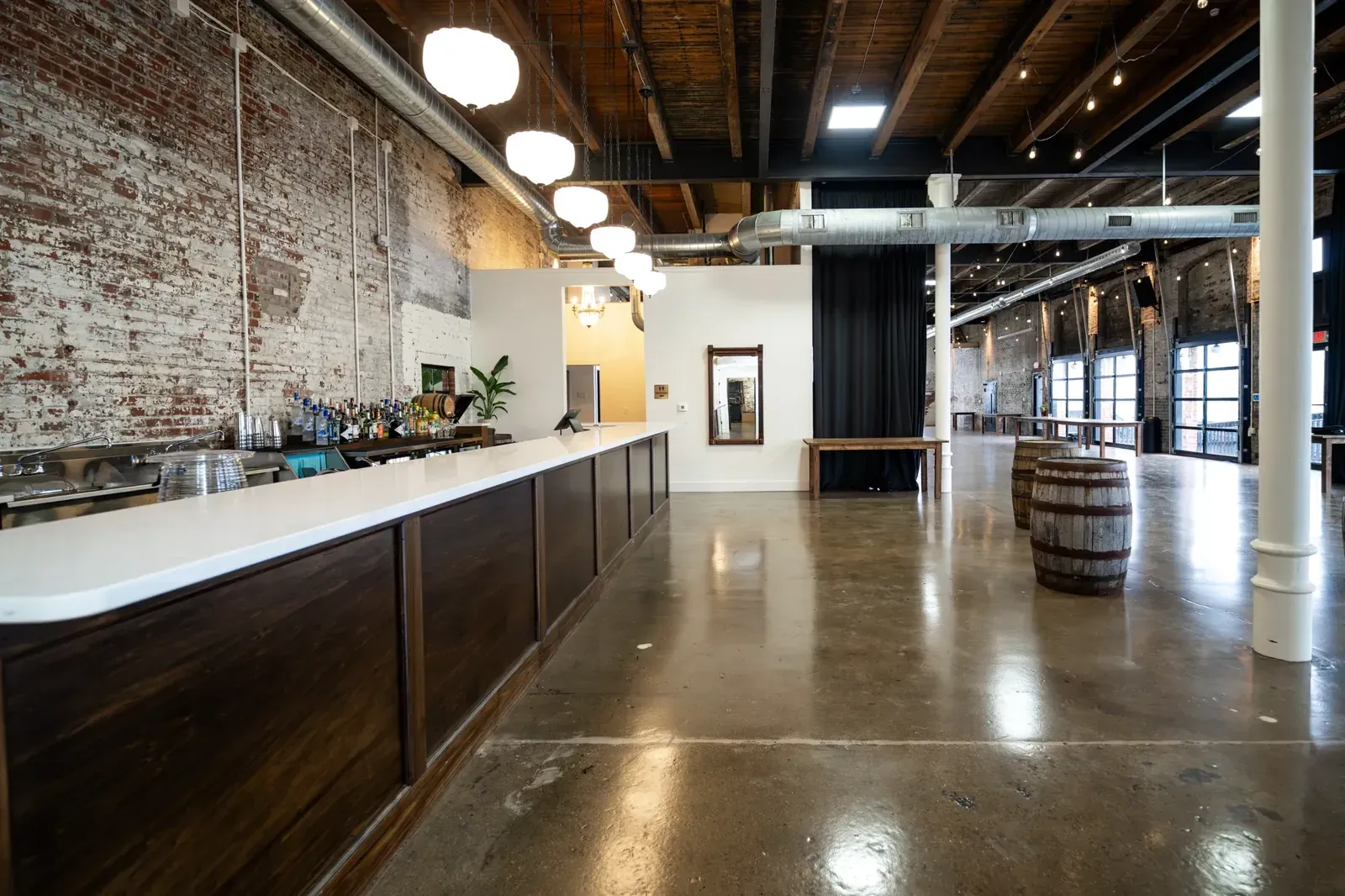
What Does an Open Bar at a Wedding Mean?
An open bar at a wedding means guests never pay for a drink. The hosts cover the bar, usually through a package priced per guest for a set number of hours. A full open bar pours beer, wine, and liquor. A limited open bar narrows the menu but is still hosted. Either way, nobody reaches for a wallet.
It is still the default. 58% of couples offered a full open bar, another 17% served beer and wine only, and just 6% ran a cash bar (The Knot, 2025). About 9% skipped alcohol entirely, and 40% raised a champagne toast.
The terms get muddy fast, so here are the ones you will hear on venue tours:
- Open bar: the host pays, guests drink free. Can be full or limited.
- Hosted bar: also means the host pays, but some venues use it for a per-person package and others for a consumption tab. Always ask which.
- Limited bar: a hosted bar with a shorter menu, often beer and wine, or beer, wine, and one or two signature cocktails.
- Call vs premium: the tier of liquor. Call is a familiar mid-shelf brand. Premium is the top shelf.
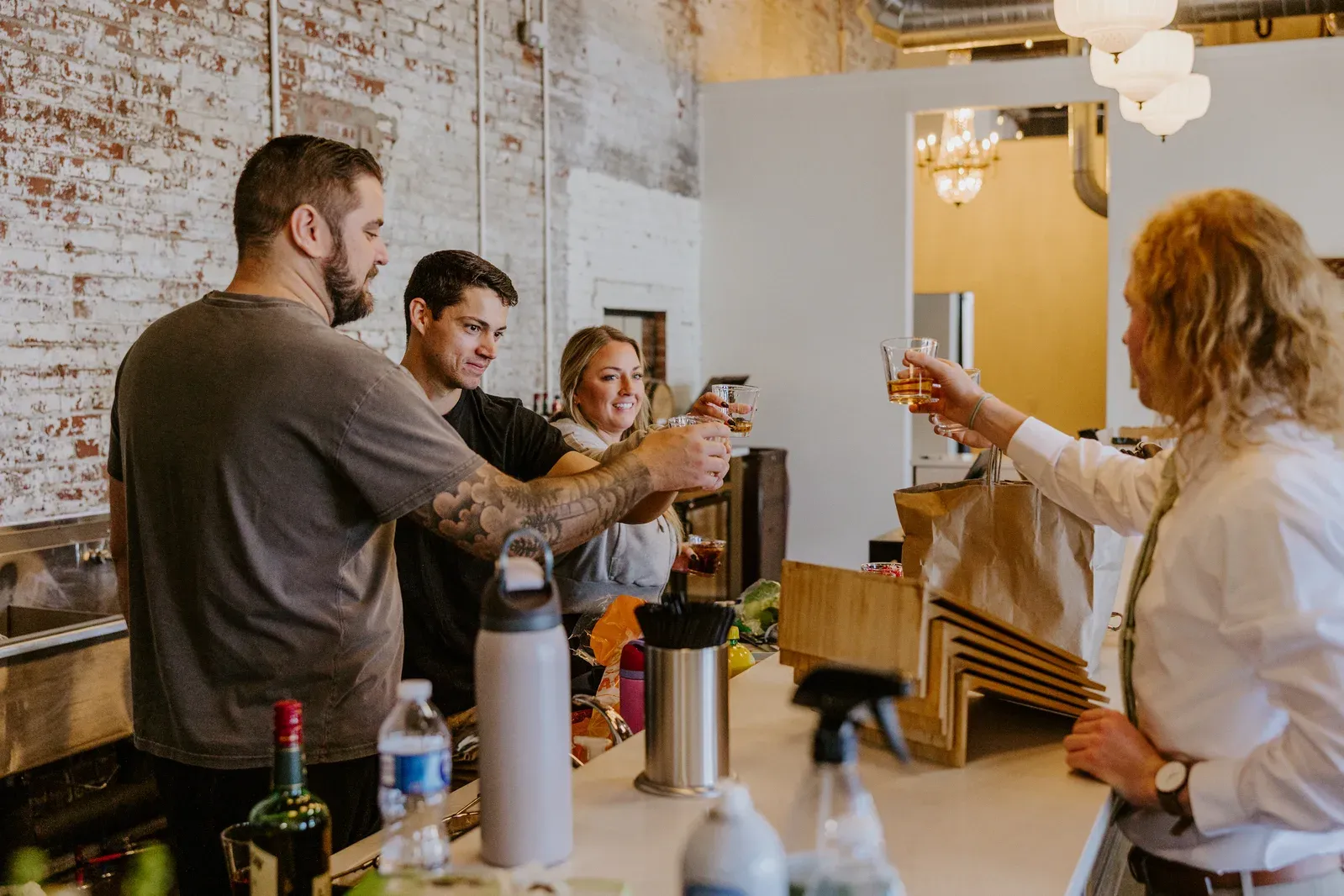 Photo: Clay House Photography
What Are the Main Wedding Bar Options?
There are six wedding bar options worth knowing: full open, limited open, consumption, drink tickets, cash, and hybrids that switch formats partway through the night. They differ on three things that matter to you: who pays, how predictable the final bill is, and what the night feels like for guests at the bar.
If you have heard there are three types of bars, that usually means open, consumption, and cash. Limited bars, drink tickets, and hybrids are variations built from those three.
| Bar format | Who pays | How it bills | Predictability | Best for |
|---|---|---|---|---|
| Full open | Host | Per guest, hourly | High | Most receptions |
| Limited open | Host | Per guest, hourly | High | Beer and wine fans |
| Consumption | Host | Per drink poured | Low | Light drinkers |
| Drink tickets | Host, then guest | Per ticket used | Medium | Many non-drinkers |
| Cash bar | Guest | Per drink | High | Casual events |
| Hybrid | Both | Mix of the above | Medium | Long receptions |
Full Open Bar
The host covers beer, wine, and liquor for the whole reception. You pay per guest of drinking age for a set number of hours, whether a guest has one drink or six. That flat structure is the whole appeal: you know the number before the wedding, and your guests never think about money once.
Limited Open Bar
Same billing as a full open bar, with a shorter menu. Beer and wine is the classic version. Adding one or two signature cocktails gives guests something to talk about without opening the whole liquor shelf. This is the format I suggest most often to couples who want to host but are watching the budget.
Consumption Bar
You pay for each drink actually poured, tallied at the end of the night. If your crowd is light drinkers, it can come in under a per-person package. If it is not, it will not. You lose predictability, and many venues attach a minimum spend to it.
Drink Tickets
Each guest gets a set number of tickets, usually two, and pays for anything past that. It works well when a good share of your guests do not drink. Some guests find tickets a little like a carnival, so I would pair them with a hosted toast or a hosted cocktail hour.
Cash Bar
Guests buy their own drinks. The host covers the bartenders and setup, not the pours. It suits casual parties and couples who do not drink themselves. At a formal reception, it is the format most likely to draw comments, which the etiquette section below gets into.
Hybrid Bars
A hybrid switches formats during the night. These are the four I see work best:
- Hosted cocktail hour, then cash or tickets. Guests drink free during the highest-energy hour.
- Hosted beer and wine all night, liquor on a cash basis. The compromise almost nobody objects to.
- Hosted to a set point, then cash. Clear on paper, but early drinkers drink free and slow sippers end up paying, so use it carefully.
- Signature cocktails plus beer and wine, then beer and wine only after dinner. A soft taper that keeps the dance floor going.
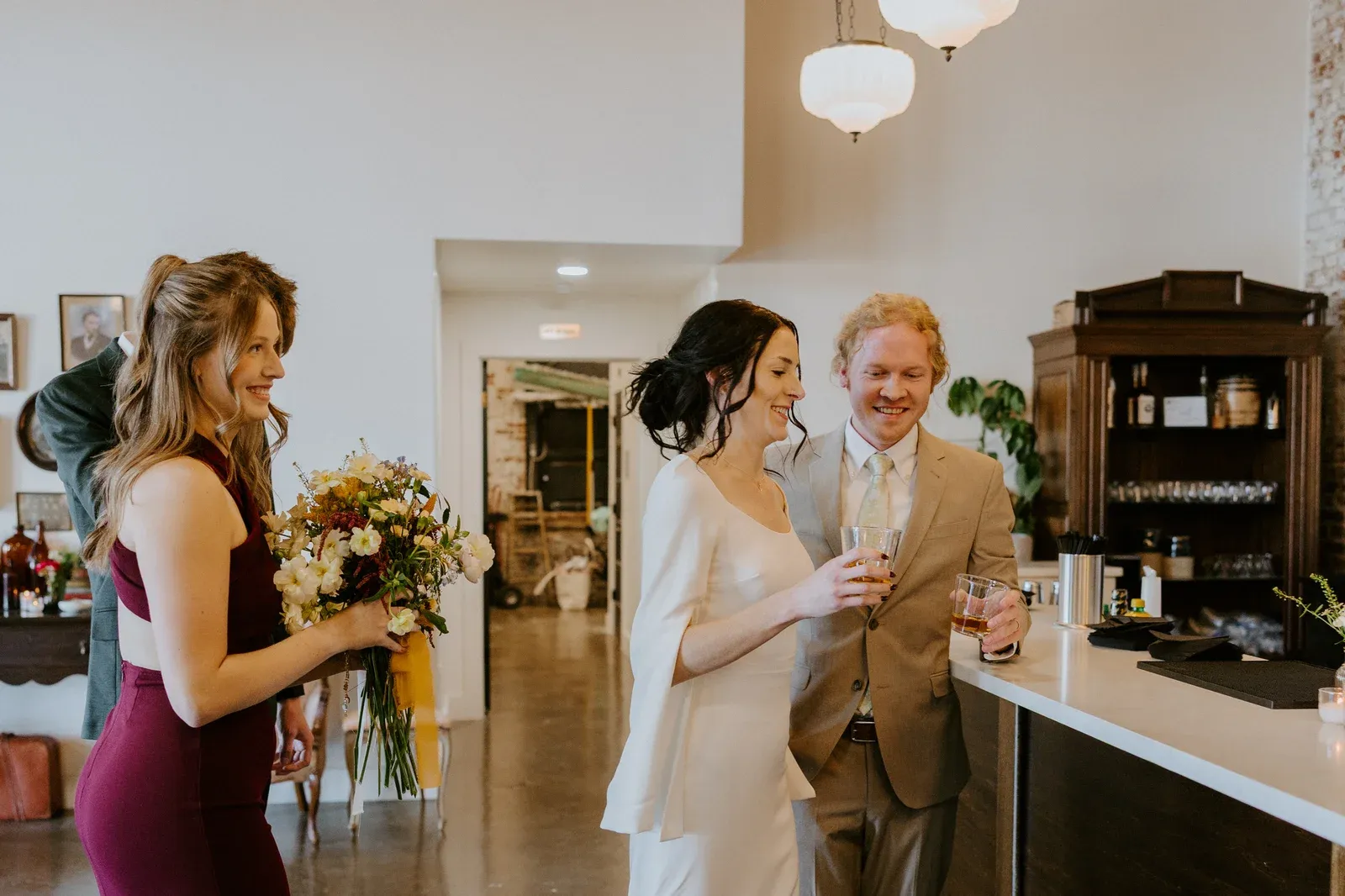
Open Bar vs Cash Bar: Which Fits Your Wedding?
Choose an open bar, full or limited, if you want guests to feel hosted from the first drink to the last and you want a number you can budget before the wedding. Choose a cash bar only when your crowd skews light or non-drinking, or the event is casual. For most receptions, a limited open bar beats a cash bar.
My honest take: guests do not care about 90% of the details couples stress over. They notice energy, food, and whether they can get a drink without waiting twenty minutes. A beautiful centerpiece will not save a reception where the bar line wraps around the room. So spend on the bar before you spend on the extras.
Some quick ways to decide:
- Your families drink, and the reception runs late: full open bar. It is the format guests expect at an evening wedding.
- Your crowd is mostly beer and wine people: limited open bar. You lose almost nothing, and guests still never pay.
- Half your guests do not drink: drink tickets, or a consumption bar with a cap you choose ahead of time.
- You are sober, or your faith keeps the wedding dry: a dry reception with a great mocktail menu, or a cash bar as a courtesy for guests who want one. Guests generally respect it when they know ahead of time.
- The budget is tight: shorten the bar hours or narrow the menu before you switch to cash. Fewer hosted hours beats more paid ones.
Is It Rude to Have a Cash Bar at a Wedding?
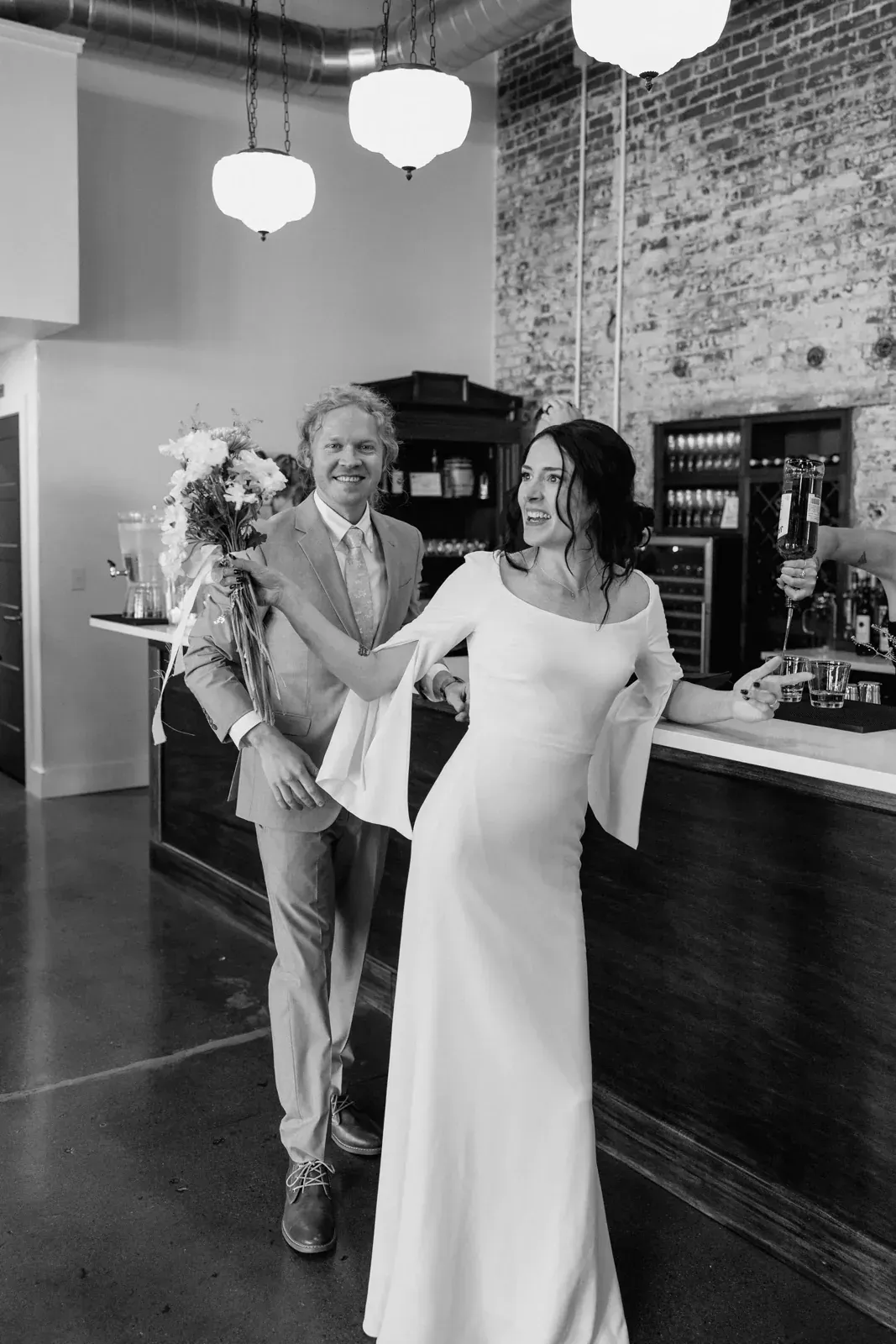
A cash bar is not automatically rude, but guests are split on it. Nearly half of Americans call asking guests to pay for their own drinks inappropriate. What makes a cash bar feel rude is surprise. Host something, say so plainly on your wedding website, and make sure the bar takes cards.
The national numbers are close. In a YouGov poll, 48% said making guests pay for their own drinks is inappropriate, 36% said it is fine, and 17% were not sure (YouGov, 2023). The same poll found 37% thought unlimited alcohol was inappropriate too, so you will never please everyone.
Traditional etiquette leans hard against it. According to Lizzie Post, co-president of the Emily Post Institute, “If you are serving alcohol, you are paying for it. You don’t ever do a cash bar.” Her alternative, in a 2017 etiquette refresher, is to limit the menu to beer and wine or a specialty cocktail and pick up the tab for that.
Couples on wedding planning forums land in the same place: host what you can, then tell people. If you do run a cash or partial bar, a few things keep it gracious:
- Put it in the FAQ on your wedding website, worded simply.
- Host at least the toast and soft drinks.
- Confirm the bar takes cards. Despite the name, guests at most cash bars pay by card, but couples on wedding forums tell stories of guests leaving a reception to drive around hunting for an ATM, and that becomes the story people remember.
- Never switch from hosted to cash without warning partway through the night.
How do you say it tactfully? Lead with what you are hosting, then name what guests cover. A line like “Beer, wine, and soft drinks are on us all night, and cocktails are available at the bar” reads warmer than “cash bar.” If you want a gentler term, “no-host bar” means the same thing.
Who Pays for Alcohol at a Wedding?
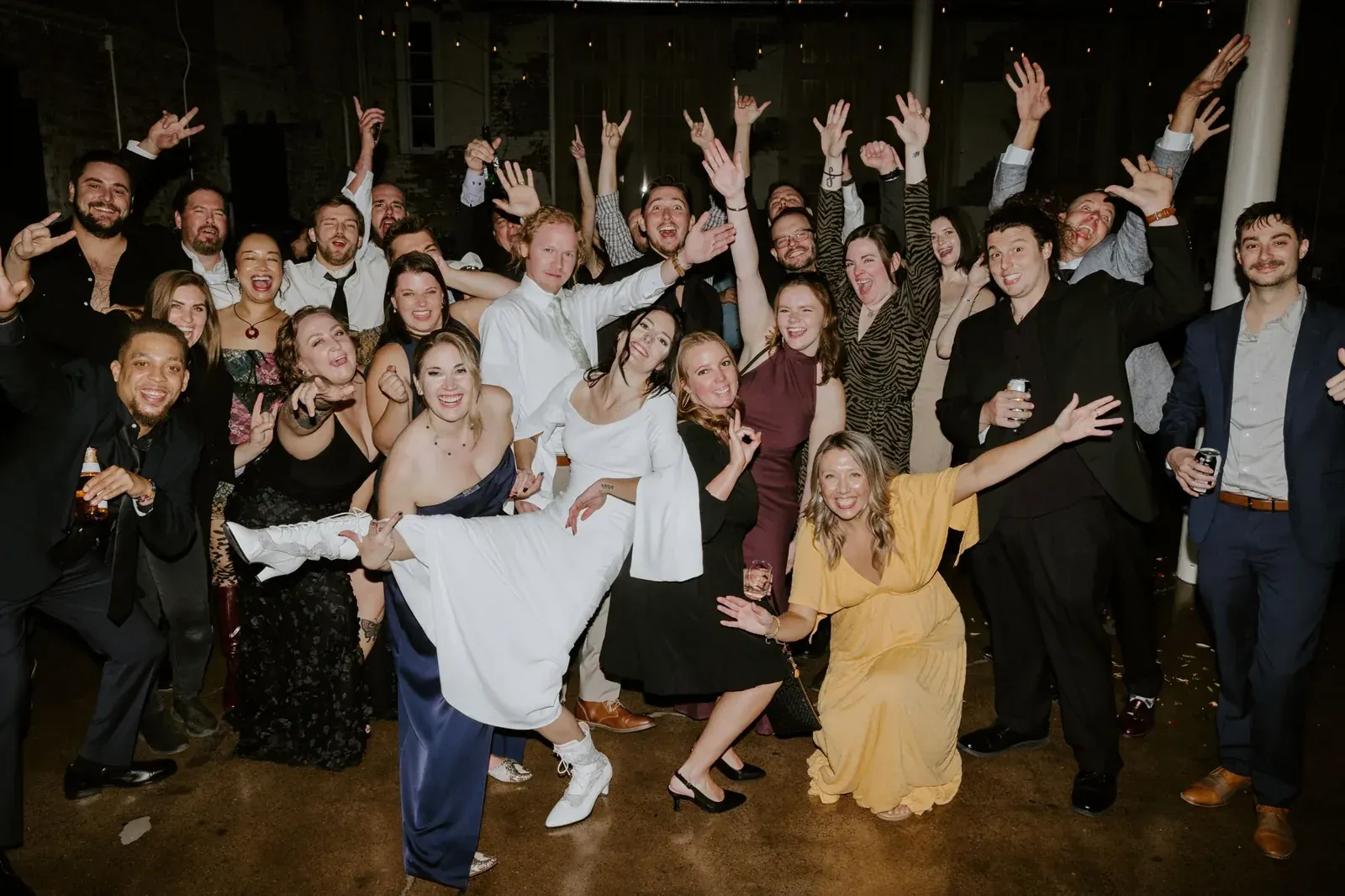
Whoever hosts the reception pays for the bar. Traditionally the hosts covered all reception expenses, and in older etiquette that meant the bride’s family. Today most couples split the costs with one or both families, and the bar is one of the most common line items for a parent to take on outright.
The Emily Post Institute’s guide to who pays for what lists all reception expenses under the hosts, while noting that family expense guidelines vary (Emily Post Institute, 2026). In practice, I see three setups:
- The couple pays for everything, including the bar.
- A parent takes the bar as their gift, which gives them a clear, visible way to contribute.
- Both families split the reception, and the bar gets folded into one side’s share.
 Photo: Clay House Photography
What guests should not do is pay for the core of the evening. A cash bar for top-shelf extras is one thing. A wedding where guests pay for every drink, toast included, is the setup that collects the most complaints.
For the full budget picture, including how the bar fits next to catering and the venue, see what a wedding costs in Indianapolis.
How Do You Read a Wedding Bar Package?
Read a wedding bar package for five things: how it bills, who counts toward the headcount, what each tier actually pours, how gratuity and service charges work, and how many bartenders are on the floor. Get all five in writing. Most bar-bill surprises come from one of them, not from the drinks themselves.
These are the questions I would ask any venue, in order:
- How is it billed? Per guest per hour, per drink, or a flat bar fee? A per-person package and a consumption bar can look similar on a proposal and land very differently.
- Who counts? Usually only guests 21 and older, but confirm. Ask how non-drinkers and kids are handled.
- What does each tier pour? Ask for the brand list, not just the tier name. “Premium” means different bottles at different venues.
- Is there a bar minimum? A bar minimum is the least you agree to spend on the bar, common with consumption and cash bars. Ask what happens if you fall short.
- How do gratuity and service charges work? Is gratuity automatic, and is it separate from any service charge? Our hidden wedding venue costs guide explains why those two are not the same thing.
- How many bartenders, and how many bar stations? This decides how long the line gets.
- What is included beyond the alcohol? Soft drinks, mixers, ice, glassware, a champagne toast, non-alcoholic options.
- When is last call? Most bars announce last call about 30 minutes before service ends.
- When are final selections due? Usually with your final headcount, a few weeks out.
If you want the wider list of questions for a walkthrough, our wedding venue tour questions cover the room, the vendors, and the contract too. And bar policy is one of the factors that belongs in how to choose a wedding venue from the start, not after you sign.
Why Do Venues Require Their Own Bartenders?
Venues require their own bartenders because Indiana law and liability make it the safest way to serve. Anyone tending bar needs an employee permit and server training, liquor at an event requires a licensed alcoholic beverage caterer, and the person pouring is responsible for not serving someone who is visibly intoxicated.
Here is what Indiana requires, in plain terms (this is general information, not legal advice):
- Bartenders need a permit. Indiana requires an employee permit for bartenders and servers, plus a certified server training program within 120 days of hire (Indiana ATC, 2026).
- Liquor needs a licensed caterer. A host can apply for a temporary permit to serve beer and wine at a one-time event, but serving liquor requires hiring a licensed alcoholic beverage caterer (Indiana.gov, 2026).
- Under-21 staff cannot tend bar. Servers aged 18 to 20 may not act as a bartender or serve in a bar area.
- Serving an intoxicated guest is a crime. Indiana makes it a criminal offense to furnish alcohol to an intoxicated person, and the provider can face civil liability if someone is hurt (Indiana State Excise Police, 2026).
That last point is not abstract to me. As I tell every couple on a tour, “It’s my bartenders’ liquor licenses on the line… we take that very seriously.” I once had to cut off a father of the bride who arrived already drinking. It was the hardest conversation in the room that night, and my bartenders and I backed each other. He came back the next day and apologized.
This is also why “open vendor” venues still keep the bar. We let couples hire any licensed caterer they like, and our guide to venues that allow outside catering shows how common that split is across Indianapolis. For the permit side from the caterer’s view, see our Indianapolis wedding catering guide.
How Many Drinks and Bartenders Do You Need?
Plan on two drinks per guest in the first hour and one per hour after that, and one bartender for every 50 to 75 guests. Those two rules of thumb answer most bar-planning questions, and a per-person package makes the drink math the venue’s problem instead of yours.
The drinks-per-guest rule and the bartender range both come from Zola’s planning guidance, which also suggests one bar station per 75 to 100 guests and notes that most packages run four to five hours (Zola, 2026). For reference, one standard drink holds about 14 grams of pure alcohol, roughly a 12-ounce beer at 5% (NIAAA, 2026).
| Guests | Drinks, 4-hour reception | Drinks, 5-hour reception | Bartenders at 24 Shelby |
|---|---|---|---|
| 75 | about 375 | about 450 | 1 |
| 100 | about 500 | about 600 | 2 |
| 150 | about 750 | about 900 | 2 |
| 200 | about 1,000 | about 1,200 | 3 |
Those drink counts assume every guest drinks at the rule-of-thumb pace, which they will not. Treat them as a ceiling. If you are on a consumption bar, they are a useful worst case to plan around.
A few timing habits keep the night smooth:
- Open the bar the moment the ceremony ends. The cocktail-hour rush is when lines form.
- Pause service briefly for toasts so everyone has a full glass and is facing the right way.
- Call last call about 30 minutes before the bar closes, and keep water and soft drinks flowing to the end.
- Plan rides. Downtown Indianapolis makes rideshare easy, whether guests are heading to a hotel near the Circle, an after-party on Mass Ave, or home through Fountain Square.

How Bar Service Works at 24 Shelby
At 24 Shelby, every drink is poured by our in-house bar team, outside alcohol is never permitted, and the bar is booked separately from the venue rental. Couples choose from per-person packages in three tiers, drink tickets, a consumption bar, or a cash bar, plus add-ons like a champagne toast.
Here is how it works when you book with us:
- Three package tiers, priced per person for guests 21 and older: Beer and Wine, Basic (adds standard liquor), and Premium (adds top-shelf liquor), each available for three to six hours. Our packages bill per person by the hour, so there is no spend minimum on them.
- His and hers or specialty cocktails are included on the Basic and Premium tiers at no additional charge.
- Drink tickets in the same three tiers, a consumption bar (which does carry a minimum), and a cash bar for couples who want one.
- A soda package and a champagne toast as add-ons, and gratuity is added automatically to bar packages, so nobody gets a surprise at the end of the night.
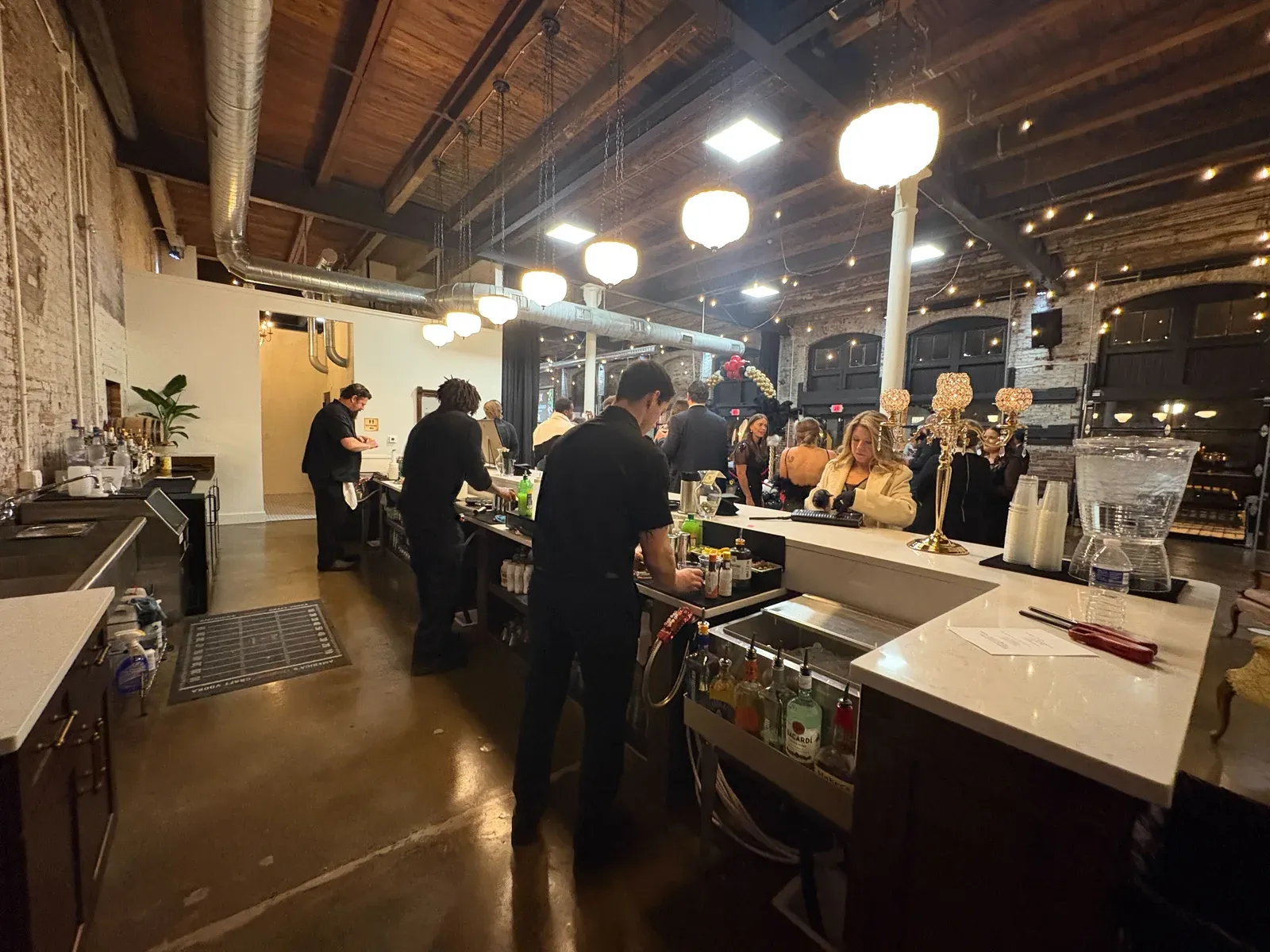
- One bartender per 75 guests, working a bar built oversized on purpose so several bartenders can serve at once. We seat up to 200 for a wedding, which means three bartenders at full capacity.
- Final bar selections are due 30 days before the wedding, along with your final headcount.
The limitation, said plainly: if you were hoping to bring your own wine or a case of your uncle’s homebrew to save money, we are not your venue. That is Indiana law and our licenses, and it is not negotiable. What you get instead is a team with more than 20 years of events experience, and a bar staff that keeps the line moving.
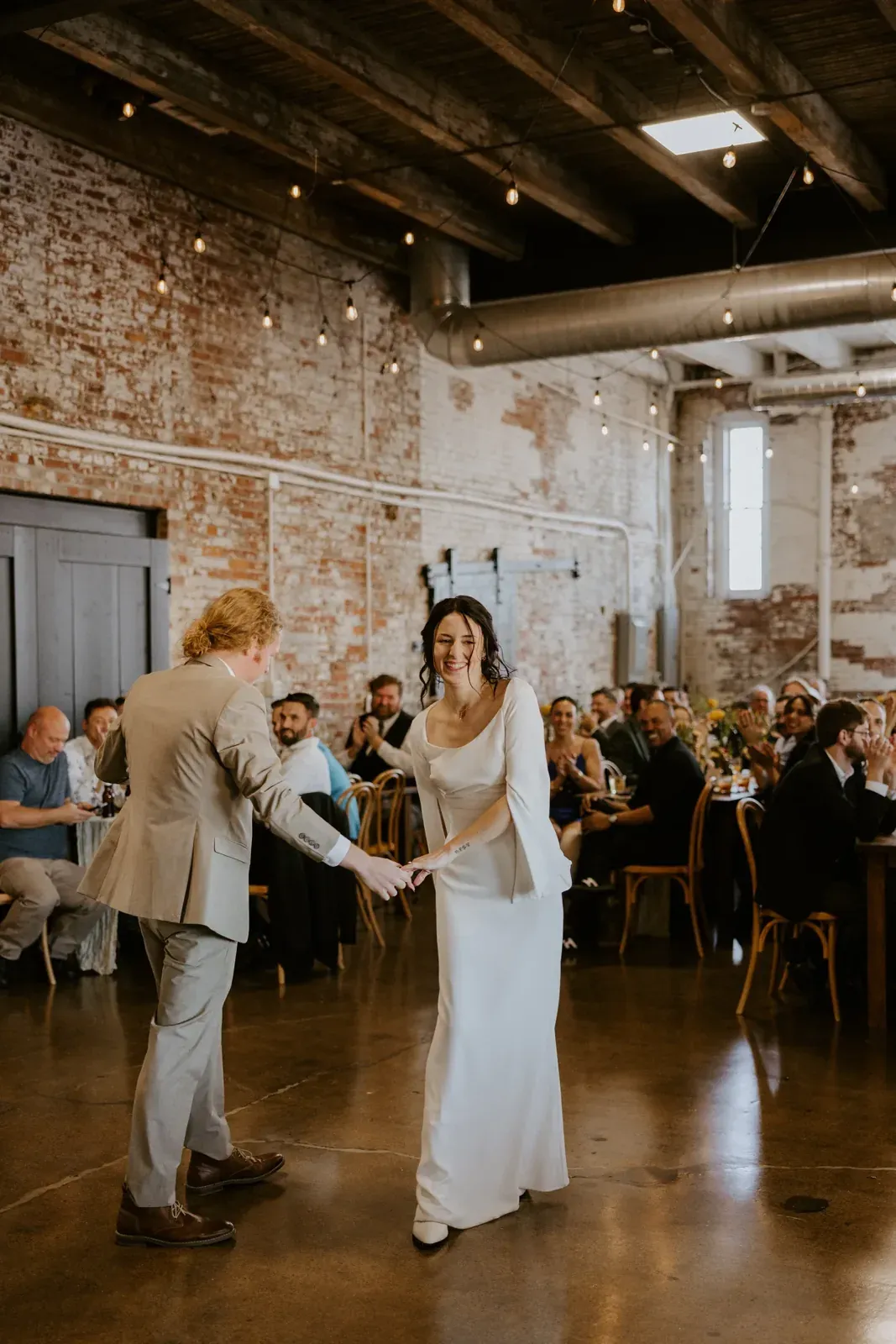
Marin, who married here in October, put it better than I could: “The bartenders were probably the most popular people there. Not only were they very knowledgeable, but they were so much fun. And my grandma loved all 3 of her margaritas.”
The full menu and tier details are on our bar page, and the weddings page covers everything else the rental includes. Planning something smaller, like a party after a courthouse ceremony? Our guide to hosting a reception-only wedding walks through how the bar fits a shorter event. And if you want numbers for your date and guest count, reach out and I will send you our bar packages directly.
Frequently Asked Questions
What does an open bar at a wedding mean?
An open bar means the couple, or whoever is hosting, pays for the drinks so guests never pay at the bar. A full open bar includes beer, wine, and liquor. A limited open bar narrows the menu, usually to beer and wine or beer, wine, and a signature cocktail. It is the most common setup, offered by 58% of couples as a full open bar (The Knot, 2025).
Is it rude to have a cash bar at a wedding?
Opinions split almost down the middle. In a national poll, 48% of Americans said asking guests to pay for their own drinks is inappropriate and 36% said it is fine (YouGov, 2023). The friendlier route is to host something, even just beer, wine, and soft drinks, and say clearly on your wedding website what guests will pay for. Surprise is what reads as rude.
Who traditionally pays for the alcohol at a wedding?
Traditionally the hosts of the reception pay for all reception expenses, bar included, and in older etiquette that meant the bride's family (Emily Post Institute, 2026). Today most couples split costs with one or both families, and the bar is a common line item for a parent to take on. The rule that has not changed: whoever hosts the reception pays for whatever is served.
What is the difference between a hosted bar and an open bar?
Both mean the host pays and guests do not. Venues use the words differently, though. Some use hosted bar to mean a per-person open bar package. Others use it to mean a consumption bar, where the host pays for each drink actually poured. When a venue quotes a hosted bar, ask whether you are billed per guest, per hour, or per drink.
What does a consumption bar mean at a wedding?
A consumption bar, also called an on-consumption or tab bar, bills the host for each drink actually served instead of a flat per-person rate. You pay only for what guests drink, which can work well for a light-drinking crowd. The trade-off is predictability: you will not know the final number until the night ends, and many venues require a minimum spend.
How many bartenders do you need for a wedding?
Plan on one bartender for every 50 to 75 guests for efficient service (Zola, 2026). At 24 Shelby we staff one bartender per 75 guests, so a 150-guest wedding gets two and a 200-guest wedding gets three. A full liquor menu, a cash bar where every drink is a payment, or a big cocktail-hour rush all argue for the tighter end of that range.
Can you bring your own alcohol to an Indianapolis wedding venue?
At most Indianapolis venues, no. Indiana requires anyone tending bar to hold an employee permit, and serving liquor at an event requires a licensed alcoholic beverage caterer (Indiana ATC, 2026). Venues that hold the license run the bar themselves. At 24 Shelby, outside alcohol is never permitted, and every drink is poured by our in-house team.
How many drinks per guest should you plan for at a wedding?
A common rule of thumb is two drinks per guest in the first hour and one per hour after that (Zola, 2026). For a five-hour reception, that is about six drinks per drinking guest, though plenty of guests drink far less. A per-person package removes the guesswork entirely, since you pay per guest rather than per pour.
Related Reading
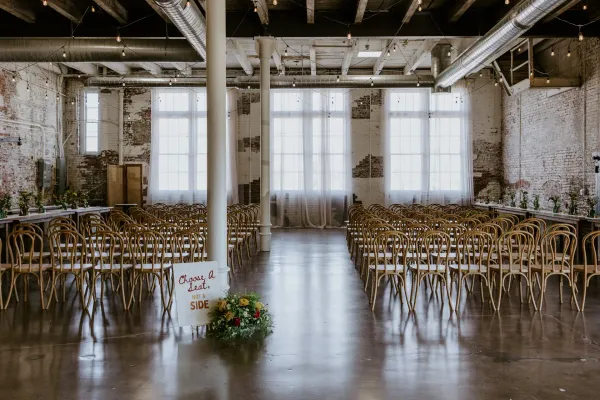
Planning
How to Choose a Wedding Venue in Indianapolis
How to choose a wedding venue in Indianapolis: the six filters to run in order, from guest count to catering rules, plus a pre-tour checklist.
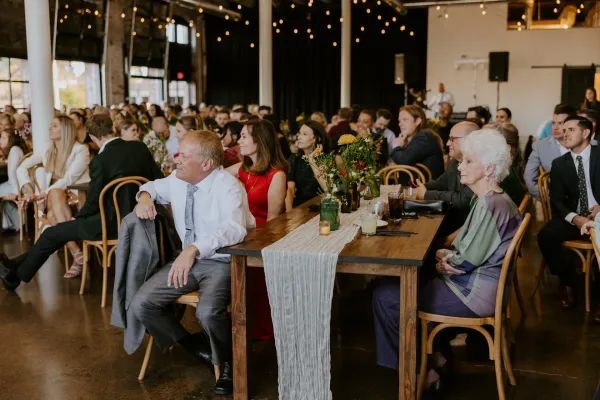
Planning
How to Host a Reception-Only Wedding in Indianapolis
How to host a reception-only wedding in Indianapolis: etiquette, who to invite, invitation wording, how the timeline changes, and where to hold the party.
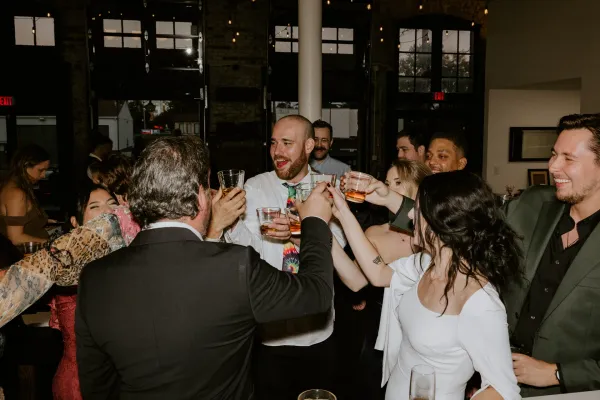
Planning
Wedding Welcome Party Venues in Indianapolis
What a wedding welcome party is, who to invite, how it differs from a rehearsal dinner, what to serve, and 7 Indianapolis venues for 40 to 80 guests.